

How to Plan a Glow in the Dark Halloween Scavenger Hunt
Plan a glow in the dark Halloween scavenger hunt with 20+ clue ideas, hiding spots, and safety tips. Follow the timed setup so kids stay glowing all night.
Last Updated: November 1, 2026
Quick Summary
To plan a glow in the dark Halloween scavenger hunt, pick a dark space, charge all glow items under a bright lamp for at least 4 hours the day before, and hide numbered clue cards in a loop so each clue leads to the next. Keep one small night light near stairs and give each child a flashlight for safety.
- Indoors works best for families with kids aged 3 to 8, while backyards suit bigger groups and older kids.
- Print and number clue cards two days before the hunt and write an answer key.
- Hide clues 30 minutes before and walk the full trail yourself with the flashlight off.
- Keep clues at kid eye level or lower and hide glow markers near, not on, the clue.
- Keep glow sticks away from kids under 3 and check items for cracks before the hunt.
Table of Contents
- Step 1: Choose Your Setting and Set the Scene
- Step 2: Gather Supplies and Build a Timed Setup Plan
- Step 3: Write Halloween Scavenger Hunt Clues for Kids
- Step 4: Use Halloween Scavenger Hunt Printable Clues and Hide the Trail
- Step 5: Follow Halloween Scavenger Hunt Safety Tips for After Dark
- Step 6: Add Kindness Activities for Kids in October
- Step 7: Reveal the Final Treasure and Troubleshoot the Hunt
- Shop Your Glow Hunt Essentials at Boo Buddy Magic
- Frequently Asked Questions
Step 1: Choose Your Setting and Set the Scene
A glow in the dark Halloween scavenger hunt works best when you pick the right space first. The glow in the dark Halloween scavenger hunt is really a treasure hunt with light, so the dark is your main tool.
Indoor vs. Outdoor: Which Works for Your Group
Indoors wins for most families with kids aged 3 to 8. You control the light, the weather, and the hiding spots. A rainy afternoon or a cold night never ruins the plan.
Outdoors shines for bigger groups and older kids who want more space to run. A backyard works well if you block off unsafe areas first.
Pick based on these factors:
- Age group: younger kids do better indoors with short distances
- Group size: teams of 4 or more need more room
- Weather: rain or wind pushes the hunt inside
Building a Spooky Atmosphere with Glow and Blackout
The spooky atmosphere comes from contrast. Turn off the lights, close the curtains, and let the glow items do the work. A pitch-black setting makes even a small glowing egg feel like magic.
Try these cheap tricks:
- Tape glow sticks along a path to mark the trail
- Hide glowing eggs or clue cards in dim corners
- Use a blackout curtain in one room for the final reveal
Keep one small light on near the stairs. Safety beats total darkness every time.
Step 2: Gather Supplies and Build a Timed Setup Plan
A glow in the dark Halloween scavenger hunt lives or dies on two things: every glowing item charged and tested before the lights go out, and clues hidden in an order you can walk in the dark. The Ultimate Glow Bundle gives you a ready-made set of glow supplies to gather everything in one purchase.

Supplies checklist
- Glow sticks and glow bracelets (one per child plus a few spares for trail markers)
- Glow-in-the-dark eggs, stars, or clue cards
- Printable clue cards and a marker for numbering
The Ultimate Glow Bundle includes a glow bracelet, a glow keychain, and 31 daily kindness cards for October, along with a plush and storybook.
Timed setup plan
| Time before hunt | Task | Why it matters |
|---|---|---|
| 2 days before | Print clue cards, number them, and write the answer key | Gives ink time to dry and lets you catch typos before hiding |
| Day before | Charge all glow items under a bright lamp for at least 4 hours; sort prizes; walk the trail and note hazards | Glow items lose charge in storage, so a fresh charge the day before is the minimum |
| 60 minutes before | Clear the floor, set decorations, hang the blackout curtain, and place the night light | Removes trip hazards while you can still see |
| 30 minutes before | Hide clues in order, then walk the full trail yourself with a flashlight off | Catches dead-end clues and spots where glow is hidden by furniture |
| 10 minutes before | Hand out flashlights, read the rules, dim the lights, and do a 30-second glow test | Confirms every marker is visible before kids start |
The glow-charging rule most guides miss
Glow-in-the-dark items need light to charge, and a dark closet does not count. Charge items under a bright lamp before the hunt, then place them close to when kids will search.
Do not hide glow items in a room that stays lit until the last minute. The contrast between a bright room and a dark trail is what makes the hunt feel magical, so dim the whole route at once rather than one room at a time.
Backup lighting plan
Total darkness is not the goal. A common pattern is one small night light near stairs, one low flashlight per adult, and glow markers at every turn. Test the route with the lights off and ask yourself whether a 5-year-old could follow the glow without running into furniture. If the answer is no, add one more marker rather than turning on an overhead light.
Step 3: Write Halloween Scavenger Hunt Clues for Kids
Halloween scavenger hunt clues for kids should do three jobs at once: point to one spot, mention the glow so kids know what to look for, and match the reading level of the child holding the card. A good clue is one or two lines, rhymes just enough to feel like a riddle, and names a landmark a child can see in the dark. The samples below are written for a glow hunt, with the glowing marker built into the riddle.
Match the clue to the reading level
- Ages 3 to 4: picture clues or one-word hints taped next to a glow stick; an adult reads the riddle aloud.
- Ages 5 to 6: two-line rhymes with a clear answer and a glow word ("glow," "shine," "light") in the first line.
- Ages 7 to 8: riddles with a small twist and a direction word ("under," "behind," "above") so they have to look, not just guess.
Sample glow-hunt clue cards
Use these as written or swap the room names to fit your space. Each clue assumes a glowing marker is hidden at the answer spot.
- "A green glow waits where you watch your shows. Look low, look under, that's where it goes." (under the couch or TV stand)
- "Shake the dark and find your prize. Check the spot where the cold food lies." (refrigerator door handle)
- "A glowing egg hides near your bed. Look where you rest your sleepy head." (under the pillow)
- "Follow the light to the switch on the wall. The next clue glows where the light would fall." (light switch plate)
- "The final treasure is close, don't fear. Look where the ghost's glow will soon appear." (final treasure basket)
- "Brr, it's cold, but the glow is hot. Check the drawer where the spoons are got." (kitchen utensil drawer)
- "Step by step and up you climb. The glow is waiting at the top this time." (top of the stairs)
How to build a clue trail that works in the dark
Write one clue per card and number the back so kids follow the trail in order. Put the first clue somewhere easy, like the front hall, and make the last clue point to the treasure. A simple pattern is to move kids through rooms in a loop so the search feels bigger than the space actually is. Keep clues at kid eye level or lower, and hide the glow marker near, not on, the clue so kids do not grab the card and run past the next spot.
Read every clue aloud before the hunt and ask a child to solve it. If they need more than one hint, the clue is too hard for the age group and should be simplified.
Printable clue card format
A printable set works best when each card has three parts: the riddle, a small glow icon, and a number. Print one set per team so two teams do not chase the same card. If you are hiding clues for a mixed-age group, print two versions of the same trail: a picture version for pre-readers and a rhyme version for older kids, and hide them side by side so every child has a card they can solve. Adapting this inclusive approach ensures that every participant remains engaged, a principle that applies equally well when you coordinate other outdoor party games for a lively celebration.
Step 4: Use Halloween Scavenger Hunt Printable Clues and Hide the Trail
Halloween scavenger hunt printable clues save you time and keep the hunt organized.
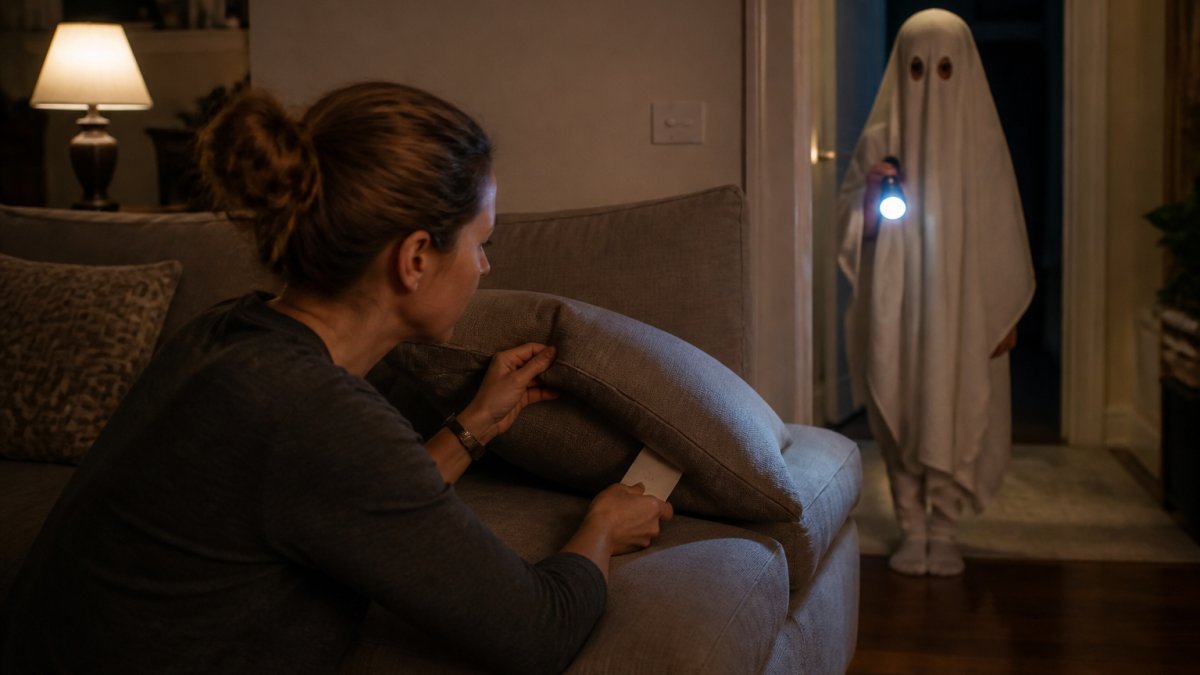
Hiding the trail takes a little thought. Put the first clue somewhere easy, like the front hall.
Tips for hiding spots:
- Keep clues at kid eye level or lower
- Use the same room twice only if the spots are far apart
- Mark the trail with glow bracelets so kids can follow it after dark
Glow bracelets can help mark the trail, so kids can follow the glow after the lights go out. You can pick up Boo Buddy Glow Bracelets to mark the trail and hide clues.

Step 5: Follow Halloween Scavenger Hunt Safety Tips for After Dark
Halloween scavenger hunt safety tips matter more once the lights are off. Most problems come from tripping, not from the dark itself. Clear the floor, test the path, and set a few ground rules before kids start.
Run through this list first:
- Clear toys, cords, and furniture from the trail
- Keep stairs lit with a small night light
- Set a boundary kids cannot cross
Glow Material Safety and Supervision
Glow sticks and glow jewelry are safe when used as directed, but they are not toys to chew.
Supervision is the real safety net. One adult per team keeps the search fun and calm.
Supervision and basic material checks help keep the hunt safe. Read this guide to glow in the dark plush safety for guidance on product safety and supervision before running the hunt.
Step 6: Add Kindness Activities for Kids in October
Kindness activities for kids in October turn a fun hunt into a family tradition. Tuck one small kindness task into each clue. Kids solve the riddle, then do a quick good deed before moving on.
Simple tasks that fit the hunt:
- Leave a kind note for a sibling
- Share one treat with a friend
- Help set the table without being asked
This is where Boo Buddy Magic fits naturally. Our glow-in-the-dark ghost plush turns each kind act into a "Kindness Spark" kids can see. Shine a light on Boo's heart, turn off the lights, and watch it glow.
Step 7: Reveal the Final Treasure and Troubleshoot the Hunt
The final treasure is the payoff, so make it count. Hide a basket of treats and small prizes where the last clue points. Dim the lights, gather the kids, and let them find it together.
If the hunt stalls, keep these fixes handy:
- Kids stuck on a clue: give a warm or cold hint
- Too dark: add one small light near the trail
- Glow items dim: recharge them under a lamp
Tie the reveal to Boo Buddy if you use the plush. Learn who Boo Buddy is so the final treasure reveal ties into the brand's kindness ghost character.
Shop Your Glow Hunt Essentials at Boo Buddy Magic
Planning a glow in the dark Halloween scavenger hunt takes a little prep, but the payoff is a night kids talk about for weeks.
That is what we build at Boo Buddy Magic. Pair it with our Glow Keychain for a small glow kids can carry anywhere.

Get started with Boo Buddy Magic and turn your Halloween hunt into a kindness tradition.
Frequently Asked Questions
How do you plan a glow-in-the-dark Halloween scavenger hunt?
Start by picking an indoor or outdoor space and gathering glow supplies like glow sticks, glowing eggs, and a blacklight. Write six to ten clues, charge all glow items under light, then hide them along a trail that ends at a prize. Set a 20-30 minute window, assign a supervising adult, and test every glow item in the dark before kids start searching.
What do you put in a glow-in-the-dark Halloween scavenger hunt?
Fill the hunt with glow items, hidden treats, or small prizes. Clue cards can be printed on bright paper so kids can spot them in a dim setting. Add a Boo Buddy Glow Bracelet ($1.99) or Glow Keychain ($7.00) as a wearable prize that keeps the glow going after the hunt ends.
How many clues should a kids' Halloween scavenger hunt have?
Plan six to ten clues for ages 3-5 and ten to fifteen for ages 6-8. Younger children need shorter trails with obvious hiding spots, while older kids enjoy riddles and a longer path. Keep each clue to one or two sentences, and place the final treasure clue where the prize is easy to reach without climbing.
How can you make a Halloween scavenger hunt about kindness?
Turn the final treasure into a kindness challenge. Hide a Boo Buddy plush or glow accessory at the end, then give each child a simple act of kindness to complete, like handing a glow bracelet to a sibling or leaving a thank-you note for a neighbor. The Ultimate Glow Bundle ($49.00) includes 31 daily kindness cards, for an October kindness routine.

Next post

Are Screen-Free Halloween Activities Worth the Effort?
Updated on 30 October 2026


