

7 Reasons Kindness Matters More Than Candy at Halloween
Discover kindness halloween ideas for kids of all ages: non-food treats, a family kindness jar, and ways to share your candy. Start planning today.
Last Updated: October 28, 2026
Quick Summary
Kindness gives Halloween a clear daily purpose beyond costumes and candy, helping children practice empathy by sharing, helping, and encouraging others. A kindness halloween tradition can make the season more memorable while building habits that last. Small acts work best, since children can practice them every day.
- Kindness gives children a clear daily purpose beyond chasing the biggest bag of candy.
- Ages 3 to 5 do best with short, hands-on tasks like sharing a tissue or drawing a picture.
- Offer non-food treats such as stickers or glow sticks, and display a teal pumpkin for families with food allergies.
- Plan the candy before the night: donate it, trade it for a small reward, or share it with someone who stayed home.
- Start a kindness jar where each act earns a token, then celebrate with a family reward at the end of October.
Table of Contents
- Why Kindness Belongs at the Center of Halloween
- How Halloween Builds Empathy in Young Children
- Practical Halloween Acts of Kindness for Kids
- Kindness Beyond Trick-or-Treating: Inclusion and Accessibility
- Alternatives to Candy-Focused Halloween Traditions
- Building Meaningful Halloween Traditions for Families
- Starting Your Boo Buddy Kindness Tradition This October
- Frequently Asked Questions
Why Kindness Belongs at the Center of Halloween
Halloween is often remembered for costumes, candy, and spooky decorations. But many families are discovering that a focus on kindness halloween traditions can make the season far more memorable. At Boo Buddy Magic, we believe the best Halloween traditions are the ones that help children feel good about helping others.
A kindness-focused tradition gives children a clear purpose each day. Instead of chasing the biggest bag of candy, kids can look for simple ways to share, help, and encourage the people around them.
Here is what matters most: kindness is something children can practice every day, and Halloween gives them a fun reason to start.
How Halloween Builds Empathy in Young Children
Empathy is the ability to notice how someone else feels and respond with care. Halloween offers opportunities for small experiences, from sharing a treat to waiting patiently in line.
A daily kindness prompt during kindness halloween activities offers a way to practice kindness. Parents looking for more ready-made ideas for young children can read kindness activities for preschoolers for a deeper look at suitable options. A child might help a sibling or thank a neighbor.
- Noticing feelings: spotting when a friend looks sad or left out
- Taking turns: sharing costumes, decorations, or trick-or-treat bags
- Speaking kindly: using words that make others feel welcome
Practical Halloween Acts of Kindness for Kids
Kids do not need big projects to practice kindness. The ideas below are small actions to consider for different ages and family schedules.
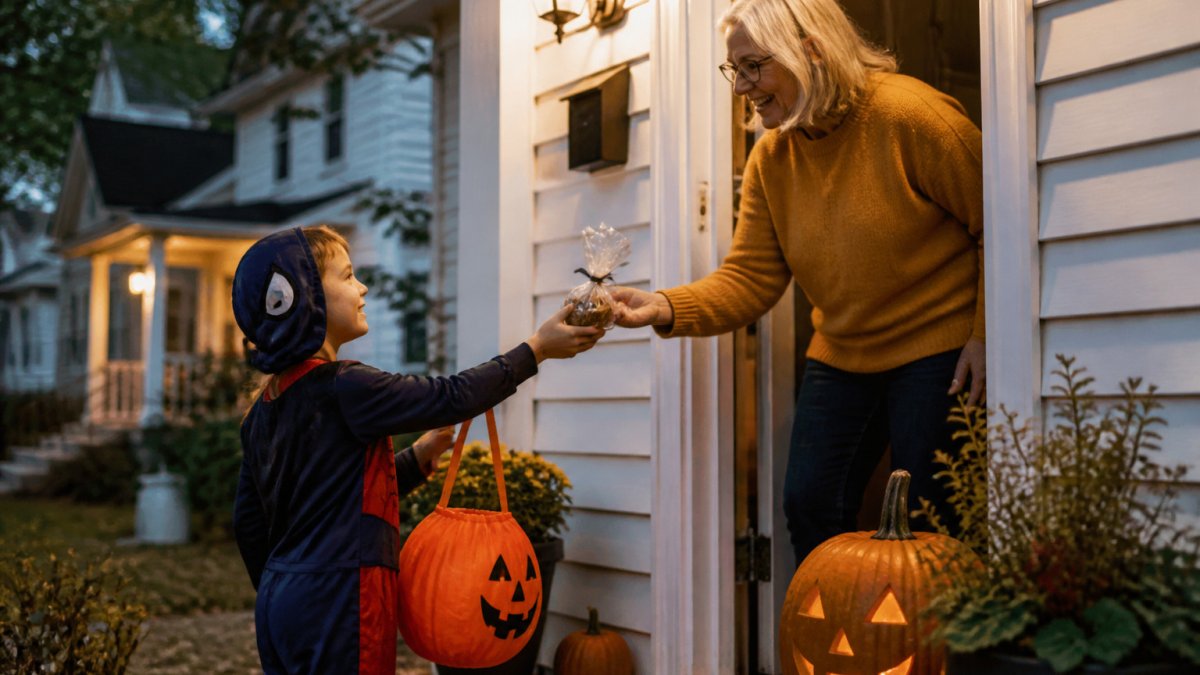
Simple activities for ages 3 to 5
Young children do best with short, hands-on tasks. Try these ideas with your preschooler:
- Hand a tissue or napkin to a friend who needs one
- Help pick up toys or decorations after playtime
- Draw a picture for a neighbor and deliver it together
- Say "thank you" to the person who hands out treats
Praise the effort rather than the perfect result.
Activities for ages 6 to 8
Older children can handle more planning and responsibility. Consider these options:
- Make a card for a family member who cannot go trick-or-treating
- Choose one candy from the bag to give to a younger sibling
- Pick a small chore that helps the household run smoothly
Let your child choose the act.
Kindness Beyond Trick-or-Treating: Inclusion and Accessibility
Trick-or-treating is not equally easy for every child. Some kids have sensory sensitivities, mobility challenges, communication differences, or anxiety about crowds. Others may not celebrate Halloween at all. Kindness means planning for all of these children before the night arrives, not just hoping things go smoothly.
Set up an accessible treat station
A few small changes at the door make a big difference. Keep a clear, well-lit path from the sidewalk to your door and remove loose leaves, cords, or decorations that could trip a child using a wheelchair or walker. Offer treats at a height a seated child can reach, or step out from behind the door to hand them over. If you use a motion-activated prop, give families a way to bypass it, since sudden noises and jump scares can overwhelm children with sensory sensitivities.
Offer non-food treats alongside candy
Some children cannot eat candy at all. The Teal Pumpkin Project encourages households to offer non-food treats such as stickers, glow sticks, or small toys and to display a teal pumpkin so families can spot participating homes (Teal Pumpkin Project). Keeping a separate bowl for non-food items is one way to separate them from candy.
Make communication flexible
Not every child says "trick or treat" out loud. Some children are nonverbal, use a communication device, or feel anxious speaking to strangers. A kind approach is to accept a smile, a wave, a sign, or a gesture in place of words, and to avoid asking a child to repeat themselves. If a child points to a bowl, simply hold it out and let them choose.
Respect families who do not celebrate
Not every household participates in Halloween, and that is a valid choice rooted in culture, religion, or personal preference. Teach your child that a dark porch or an unadorned house is not an invitation to knock repeatedly or leave a mess. A simple script helps: "Some families don't celebrate, and that's okay. We only knock where the light is on." This turns a skipped house into a lesson in respect rather than a disappointment.
Prepare for unkind moments
Peer pressure and teasing can surface on Halloween night, whether it is a comment about a homemade costume or a fight over candy. Give your child a few ready responses, such as "I like my costume" or "Let's trade if you want," and practice them at home. If your child witnesses another child being teased, encourage them to change the subject, invite the child to walk with them, or tell an adult. Standing up for a classmate is one of the most meaningful kindness acts a child can practice. Cultivating these social skills often begins at home through shared play, where engaging in fun screen-free activities helps children build the confidence and empathy needed to navigate tricky social dynamics.
Alternatives to Candy-Focused Halloween Traditions
Candy is part of Halloween for many families, and that is fine. But a candy-first approach can crowd out other meaningful moments. The goal is not to ban candy; it is to build a plan before the big night so the holiday includes connection, giving, and calm alongside the sugar.
Plan the candy before the bag is full
Decide as a family what happens to the candy after trick-or-treating. A common pattern is to let each child keep a set number of favorites and set the rest aside for one of these options:
- Donate it. Many dentists, community centers, and local charities run candy donation or buyback programs in early November. Check with your dentist's office or a nearby community center in advance, since programs vary by area.
- Trade it. Offer a small non-candy reward, such as a book, a craft kit, or a family outing, in exchange for a portion of the bag. Let your child choose the trade so they feel in control.
- Share it. Help your child pack a few treats for a neighbor, a grandparent, or a friend who could not go out that night.
Host a low-cost neighborhood alternative
If your family wants a calmer option, a small gathering can replace or supplement trick-or-treating. Keep it simple:
- Pick a time in the late afternoon, before dark, for younger children.
- Invite a few neighbors and ask each family to bring one snack to share.
- Set up one or two easy activities, such as a costume parade around the block or a craft table with paper and crayons.
- End with a kindness moment, such as a group thank-you card for the host or a cleanup crew that picks up trash together.
Start a kindness jar
A kindness jar turns the season into a month-long habit. Decorate a jar together, then agree that each act of kindness earns a marble, a pom-pom, or a slip of paper. At the end of October, count the tokens and choose a family reward, such as a movie night or a trip to the park. The jar works best when the acts are small and repeatable, like holding a door, helping a sibling, or thanking a neighbor.
Swap the focus with a book or costume exchange
A neighborhood book swap or costume exchange gives families a reason to gather without centering candy. Set a date in mid-October, ask families to bring gently used books or outgrown costumes, and let children choose something new to them. It is a practical way to reuse items, save money, and give children a chance to practice sharing and gratitude.
Building Meaningful Halloween Traditions for Families
A tradition can repeat each year. Families can build a routine around kindness.
Our Boo Buddy Arrival Box is one way families start this kind of tradition. It includes a plush ghost, a storybook, and 31 daily kindness cards, so parents do not have to plan each day from scratch. The Boo Buddy Arrival Box gives children a simple daily prompt that fits busy October schedules.

[PAGE:1]
The table below summarizes a simple way to structure your kindness routine:
| Age Group | Sample Daily Act | Time Needed | Family Role |
|---|---|---|---|
| Ages 3 to 5 | Share a treat with a friend | 5 minutes | Model and praise |
| Ages 6 to 8 | Write a thank-you note | 15 minutes | Guide and reflect |
| All ages | Help clean up together | 10 minutes | Work side by side |
Starting Your Boo Buddy Kindness Tradition This October
Pick one daily act, set a time to talk about it at dinner, and celebrate the effort.
Many families also enjoy extra activities to keep the magic going. The Boo Buddy Coloring Adventure offers a screen-free way for children to color Boo-themed pages during quiet time. Families who are comparing options can also review how a Boo Buddy vs. Elf on the Shelf tradition differs from other holiday favorites.
Start small this October.
Frequently Asked Questions
Why is kindness important during Halloween?
Halloween puts children in situations involving strangers, shared treats, and unfamiliar neighborhoods. Children can practice thoughtfulness with simple habits like saying thank you, sharing a treat with a sibling, or helping a younger trick-or-treater.
How can I teach my child kindness during Halloween?
You could try one small, concrete action per day, such as giving a compliment to a costumed neighbor or making a card for a grandparent. You could also talk through the experience afterward, asking what your child noticed and how the other person reacted. Praise effort rather than perfection.
What are alternatives to Halloween candy for kids?
Many families replace or supplement candy with non-food rewards that encourage participation, such as a kindness sticker chart, a small toy, or a shared family activity like a pumpkin-decorating afternoon. Some families hand out non-food treats to trick-or-treaters, including small glow bracelets, stickers, or bubbles. The goal is to shift attention from quantity of candy to meaningful moments. Boo Buddy Magic's Glow Bracelet, priced at $1.99, is one example of a low-cost, non-food item that fits this approach.
How can parents help children feel less stressed about Halloween?
You could set a plan for the evening, including when trick-or-treating starts, how long it lasts, and when you head home. Let your child choose parts of the experience, such as which costume element to wear. A daily routine could include one small activity.

Prev post

Are Screen-Free Halloween Activities Worth the Effort?
Updated on 30 October 2026
Next post

What Are Simple Kindness Activities for Preschoolers?
Updated on 26 October 2026


