

What Are Simple Kindness Activities for Preschoolers?
Discover simple kindness activities for preschoolers that build empathy. Learn 31 easy ideas, games, and crafts parents and teachers can use today.
Last Updated: October 26, 2026
Quick Summary
Simple kindness activities for preschoolers include daily acts like saying kind words, helping with tasks, sharing snacks, thanking helpers, and visiting someone who needs company. These activities teach empathy and compassion when woven into routines and named by adults.
- Kindness Bingo, circle time activities, and role-play scenarios help children practice caring and cooperation through play.
- Crafts like thank-you cards, kindness trees, and painted rocks let children create gifts for others.
- The American Academy of Pediatrics recommends concrete, observable examples of kindness for children aged 3-8 rather than lectures.
- Classroom kindness jars and buddy systems build kindness as a shared group value.
- The Boo Buddy Arrival Box includes a plush, storybook, and 31 daily kindness cards for October traditions.
Table of Contents
- Why Kindness Activities Matter for Young Children
- Random Acts of Kindness for Kids You Can Do Every Day
- Kindness Games for Preschoolers That Build Empathy
- Preschool Kindness Crafts and Creative Projects
- Empathy Activities for Preschoolers Through Story and Play
- Classroom and Group Kindness Activities
- Making Kindness Glow: A Magical Tradition for October
- Frequently Asked Questions
Why Kindness Activities Matter for Young Children
Teaching young children about kindness isn't just feel-good parenting, it shapes how they interact with the world. When preschoolers engage in simple kindness activities for preschoolers, they practice empathy and compassion.
Boo Buddy Magic frames kindness as magical and joyful rather than obligatory. The Boo Buddy tradition encourages children to perform small acts of kindness.
The challenge most parents face is simple: how do you make kindness feel natural and age-appropriate without turning it into another checklist item? Young children learn through play, repetition, and seeing kindness modeled by the adults they trust. The American Academy of Pediatrics' guidance on social-emotional development emphasizes that children aged 3-8 benefit most from concrete, observable examples of kindness in action, not lectures about being good.
This guide explores practical ways to weave kindness into your child's routine: activities, games, crafts, and traditions.
Random Acts of Kindness for Kids You Can Do Every Day
Kindness activities for preschoolers can be built into daily routines.
Start with kind words. Ask your child to say something nice to a sibling, friend, or family member each morning. Not "be nice", something specific: "Tell your brother one thing he's good at." Or at dinner: "Who did you help today?"
Helping with small tasks teaches kindness through action. Let your preschooler help set the table, sort laundry, or water plants. Frame it clearly: "You're helping our family right now. See how that feels?"
Sharing snacks or toys is kindness in its simplest form. When your child offers a cracker or lets someone play with their favorite toy, acknowledge it: "You shared your snack. That made them happy."
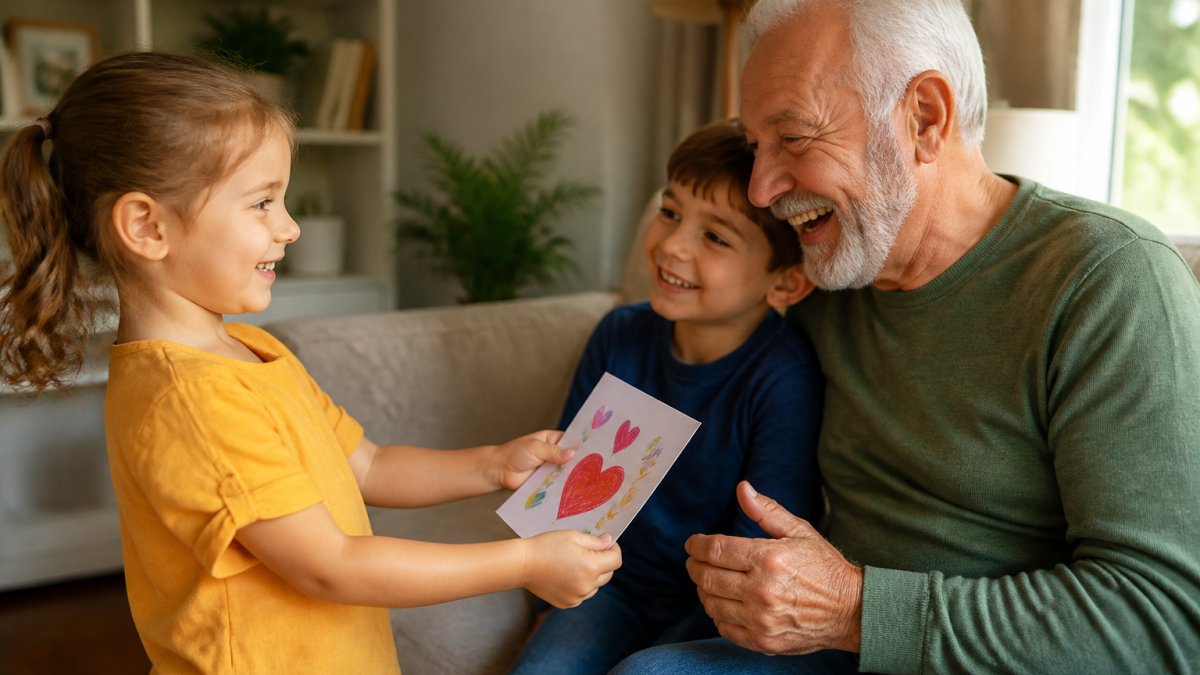
Thanking helpers teaches gratitude as a form of kindness. Help your child make a simple thank-you card for the mail carrier, garbage collector, or teacher. The act of recognizing someone's work is what matters.
Visiting or calling someone who needs company is kindness with purpose. A video call to a grandparent, a visit to a neighbor, or a drawing for someone who's sick are possible ways to connect.
These daily acts don't require products or special moments. They're woven into what you're already doing. The key is naming them.
Kindness Games for Preschoolers That Build Empathy
Games can give children a way to practice caring, sharing, and cooperation through play.
Kindness Bingo is simple and repeatable. Create a card with images or words: "Share a toy," "Say something kind," "Help a friend," "Give a hug," "Listen without interrupting." As children do these things throughout the week, they mark the square and celebrate five in a row. This makes kindness visible and trackable.
Matching games teach recognition and connection. Pair pictures of children with actions: "Who is sharing? Who is helping? Who is listening?" Ask your child to match them.
Circle time activities work well in classrooms and at home. Sit in a circle and pass around a soft object (a stuffed animal, a pillow, or even a Boo Buddy plush). Each child holds it and says one kind thing about the person next to them, or names one way they were kind that day.
Role-play scenarios let children practice kindness in safe, imaginary situations. Set up a scene: "Your friend is sad. What do you do?" or "Someone dropped their toy. How can you help?" Let your child act it out. There's no right answer. These open-ended prompts encourage children to weigh different perspectives and build critical thinking as they navigate the social complexities of their play.
Gratitude games turn thankfulness into play. At dinner, each person names one thing they're grateful for and why. Or play "thankful charades", act out something you're grateful for and let others guess.
Preschool Kindness Crafts and Creative Projects
Crafts give children a way to make something for someone else.
Thank-you cards are the simplest craft. Provide paper, markers, and stickers. Your child draws or scribbles. You write the message. Send it to a teacher, grandparent, or friend.
Kindness trees are visual and ongoing. Cut out leaf shapes from colored paper. Each time your child does something kind, they add a leaf to a tree drawn on poster board or a real branch in a vase. The tree can represent acts of kindness over time.
Painted rocks with kind messages turn a simple craft into a gift. Children paint rocks with designs or write simple words: "You're kind," "Smile," "You matter." Give them to friends.
Handmade gift bags let children package small treasures for friends or family. They decorate a bag, fill it with a drawing, a sticker, or a small toy, and deliver it.
Friendship bracelets or beaded necklaces become wearable kindness. Children create simple bracelets and give them to friends. For a magical twist, a Boo Buddy Glow Bracelet is a wearable reminder of kindness.

| Craft Type | Time | Best For | Outcome |
|---|---|---|---|
| Thank-you cards | 10-15 minutes | Expressing gratitude | Recipient feels seen and appreciated |
| Kindness trees | 5 minutes per leaf | Tracking kindness over time | Visual celebration of accumulated good acts |
| Painted rocks | 15-20 minutes | Spreading joy in the community | Surprise and delight for finders |
| Gift bags | 10 minutes | Giving to specific people | Practice in thinking of others' preferences |
| Friendship bracelets | 10-15 minutes | Wearable kindness | Lasting reminder of connection |
Empathy Activities for Preschoolers Through Story and Play
Stories can show characters making kind choices.
Reading kindness-focused picture books together opens conversations. After reading, ask simple questions: "Why did the character share? How did it make the other character feel? What would you have done?"
Storytelling with your child builds empathy through imagination. Ask: "Tell me a story about someone who needed help. What did the helper do?" Let your child create the narrative.
Puppet play or stuffed animal conversations let preschoolers act out scenarios safely. Use two stuffed animals to show conflict and kindness: "This bear is sad. This bear wants to help. What does the helping bear do?"
Character-focused discussions during everyday moments teach empathy. When you're out and see someone helping someone else, point it out: "See how that person is helping? That's kindness." You can label kindness when you see it.
Imaginative role-play where children play characters who are kind builds empathy muscles.
Classroom and Group Kindness Activities
In a classroom or group setting, kindness activities can be done together.
Circle time discussions create space for children to share and listen. Sit together and ask: "Who was kind to you today? How did it feel?" or "When did you help someone?" This normalizes talking about kindness and helps children see it as a shared value.
Buddy systems pair older and younger children or rotate partners. The older child can help the younger one.
Classroom kindness jar works like the kindness tree. When a child is caught being kind, a note goes in the jar. At the end of the week, read them aloud.
Group service projects teach children that kindness extends beyond their immediate circle. Collecting canned goods for a food bank, making blankets for animals, or creating care packages are possible group activities.
Kindness challenges motivate group participation. "This week, everyone tries to say one kind thing to someone new" or "Help a friend with something hard."
Conflict resolution practice teaches kindness in real moments. When children disagree, you can ask: "What does your friend need right now? How can you be kind even if you're upset?"
Making Kindness Glow: A Magical Tradition for October
October can be a time to build a kindness tradition. Boo Buddy Magic's tradition centers Halloween on kindness.
The Boo Buddy Arrival Box is designed to help families create a kindness tradition for October. It includes a Boo Buddy plush, a storybook, and 31 daily kindness cards with prompted activities for October.
The Boo Buddy plush has a glowing green heart. The Arrival Box includes glow-in-the-dark keepsake packaging and a hardcover book with a glow-in-the-dark heart.
The Ultimate Glow Bundle includes a Boo Buddy plush, a storybook, 31 daily kindness cards, a coloring book, a glow keychain, and a glow bracelet.
The Boo Buddy Coloring Adventure is a screen-free coloring book with Boo-themed illustrations and scenes from Boo's world.

The Boo Buddy Glow Bracelet is designed to glow in the dark.
That's the real magic of October.
Building simple kindness activities for preschoolers into your daily routine can include naming kindness when you see it, creating moments for it, and celebrating it. The Boo Buddy Arrival Box includes a Boo Buddy plush, a storybook, and 31 daily kindness cards for October.
Frequently Asked Questions
What are some simple acts of kindness preschoolers can do?
Preschoolers can offer a hug, share a toy, say thank you, help a friend, draw a picture for someone, hold the door open, or help pick up toys. These acts don't require planning or money, just a willingness to notice when someone needs help or a kind word. The Boo Buddy Arrival Box includes 31 daily kindness cards for October.
How can I teach empathy to preschoolers through play?
Try role-play games where children act out helping scenarios, such as caring for a stuffed animal or comforting a sad friend. You can ask questions like 'How do you think they feel?' and 'What could we do to help?' You can also read books about kindness and feelings or play games that involve turn-taking and sharing.
What are some easy kindness activities to do at home with young children?
Make thank-you cards together, bake cookies to share with a neighbor, create a kindness jar where family members write or draw kind things they did, play cooperative games instead of competitive ones, and practice saying kind words. Set aside a few minutes each day to talk about who your child helped or who helped them.
Can kindness activities work for children aged 3 to 8, or do I need different ideas for each age?
The Boo Buddy Arrival Box includes 31 daily kindness cards for October.

Prev post

7 Reasons Kindness Matters More Than Candy at Halloween
Updated on 28 October 2026
Next post

7 Positive Parenting Tips for October That Build Kindness
Updated on 25 October 2026


