

How to Start Family Holiday Traditions: A Complete Guide
Learn how to start family holiday traditions that stick. Create meaningful, low-stress rituals your kids will remember forever.
Table of Contents
- Why Family Holiday Traditions Matter
- How to Choose and Start a Family Holiday Tradition
- Easy Holiday Traditions for Families That Actually Work
- Meaningful Holiday Traditions for Kids That Build Connection
- Low-Stress Holiday Activities With Kids: Keeping It Simple
- Acts of Kindness for Kids During the Holidays
- Adapting Traditions for Every Family Structure and Circumstance
- Keeping Traditions Alive Year After Year
- Frequently Asked Questions
Last Updated: October 12, 2026
Why Family Holiday Traditions Matter
Creating family holiday traditions builds shared meaning your children carry into adulthood. Consistent, intentional traditions create anchors that help children feel secure, connected, and valued during otherwise chaotic seasons.
The difference between a rushed holiday and a magical one: families with established traditions know what to expect and what matters most.
At Boo Buddy Magic, we've watched families transform their season by shifting from passive consumption to intentional tradition-building. Your children won't remember every piece of candy.

How to Choose and Start a Family Holiday Tradition
The biggest mistake families make is trying to do too much at once. They see elaborate ideas online, layer five new traditions into a busy season, and by November the traditions feel like an obligation rather than a source of joy.
The real approach is simpler: choose one tradition that aligns with what your family actually values, start it small, and let it grow naturally over time.
Step 1: Decide What Matters to Your Family
Before picking any activity, identify what your family genuinely cares about: creativity, quiet cozy moments, or gathering with others and giving?
Your tradition should reflect your family's personality, not Instagram's. A family that loves the outdoors will resent indoor crafts; one that values calm will feel drained by high-energy traditions.
Write down 2-3 values that matter most to your family this season, kindness, creativity, connection, celebration, adventure, and choose a tradition that supports at least one.
Step 2: Start Small and Build Gradually
The most sustainable family holiday traditions start with one simple action repeated consistently, something you can realistically do every year without burning out.
A tradition might be reading one specific book on a certain evening, baking one type of treat, or performing one daily act of kindness together. Simplicity makes it repeatable.
Starting small also lets your tradition evolve as your children grow, a simple ritual becomes something your family anticipates and passes down.
Step 3: Make It Repeatable and Simple
The traditions that stick don't require elaborate planning, no rare ingredients or hours of setup, just a moment your family can sustain year after year.
Use the same activity each year (consistency creates anticipation), gather materials in advance, and keep instructions simple enough for tired parents. The magic isn't perfection, it's showing up.
Easy Holiday Traditions for Families That Actually Work
These traditions work because they're simple enough to happen, flexible enough to adapt, and meaningful enough to create real connection.
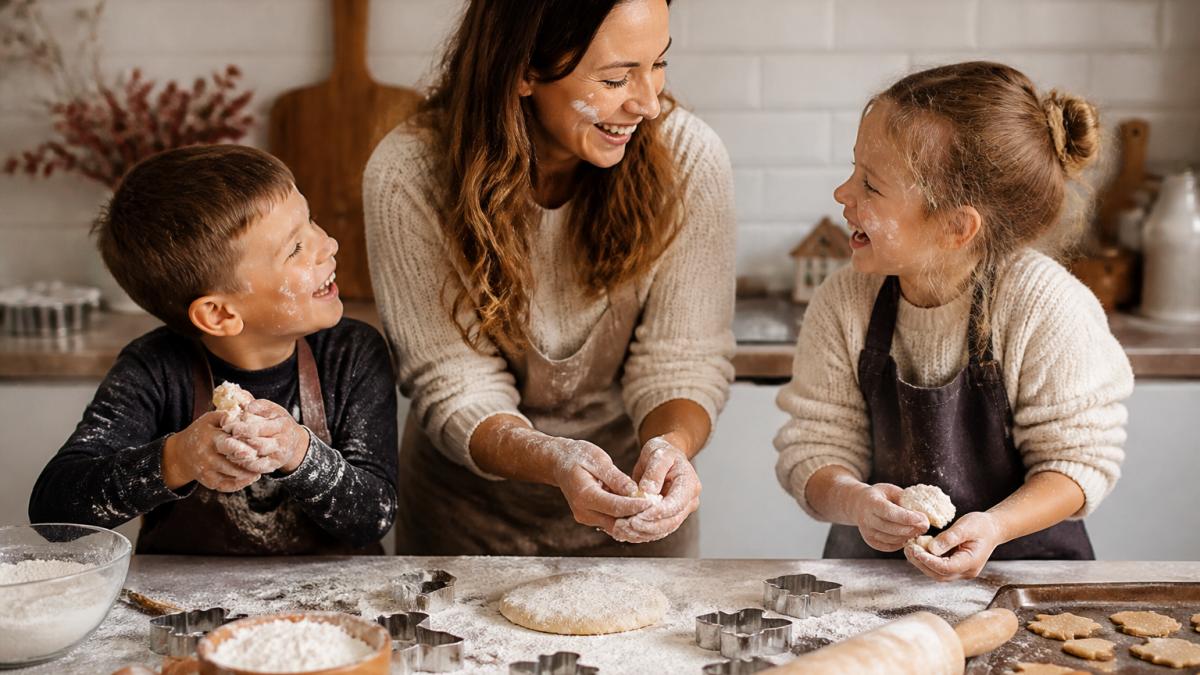
Baking and Decorating Together
Baking is one of the most accessible traditions because it requires nothing beyond ingredients most families already have. Kids love mixing, tasting, and creating something edible.
Bake the same simple cookies every year, or make one signature treat that becomes "yours." The ritual matters: gathering in the kitchen, working together, and creating something tangible to share.
A practical tip: prep your ingredients the night before. Set out bowls, measuring spoons, and the recipe so you're not scrambling when your kids wake up excited, this keeps the focus on the experience.
Movie Nights and Cozy Reading Time
A family movie night or reading tradition creates a natural pause in the season. You gather, settle in together, and share a story. No performance required, just presence.
Choose one movie or book series that becomes your annual tradition. The familiarity is part of the magic, your kids will anticipate it, quote it, and eventually share it with their own children. Pair it with hot chocolate, blankets, or popcorn so the sensory experience becomes part of the memory.
Decorating, Ornament Making, and Tree Traditions
Decorating together builds naturally over years. Your first ornament with your child becomes a keepsake; by age eight, you have a collection telling the story of their childhood.
You don't need expensive ornaments. The most meaningful are handmade: salt dough shapes with fingerprints pressed in, drawings they decorated, or wooden pieces they painted. The ornament isn't the point, creating something together and placing it on the tree is.
Advent Calendars and Countdown Activities
An Advent calendar gives structure to the anticipation. Instead of the month feeling like a blur, you get a daily ritual: opening a small door, pulling a kindness card from a jar, or crossing off a countdown chain.
The daily element transforms a long month into manageable pieces, and your child wakes up knowing one small moment of anticipation awaits. For families shifting away from candy-focused countdowns, activity-based calendars or kindness prompts offer a meaningful alternative.
Letters to Santa and Letters to Your Future Self
Writing letters creates a moment of reflection. Your child thinks about what matters to them, what they hope for, and what they want to remember. Read them aloud, seal them, and open them the following year.
This works across ages: a three-year-old might dictate while you write, and an eight-year-old can write their own. Articulating hopes and dreams, then revisiting them, builds self-awareness and records your child's growth.
Matching Pajamas and Game Nights
Matching pajamas create an instant sense of belonging, dressing alike signals "this is special." Pair it with a family game night for a tradition that builds connection through play.
Game nights don't require anything fancy, a deck of cards, a simple board game, or made-up games work. The point is laughter, friendly competition, and screen-free time together.
Meaningful Holiday Traditions for Kids That Build Connection
The traditions that stick longest are the ones that give kids a sense of purpose beyond entertainment.
One powerful approach is building a tradition around acts of kindness. Instead of focusing the season on what children get, you shift the focus to what they give and how they make others feel.
A kindness-focused tradition might involve: delivering treats to neighbors, writing thank-you notes to people who help your family, creating care packages for people in need, or performing small acts of service together. The key is consistency.
For families looking for a structured way to build this kind of tradition, the Boo Buddy Arrival Box offers a ready-made framework. It includes 31 daily kindness prompts designed specifically for young children, paired with a glow-in-the-dark plush companion that makes the tradition feel magical and special.
Low-Stress Holiday Activities With Kids: Keeping It Simple
The most sustainable traditions are the ones that don't add stress to your life.
Build your traditions around activities that fit naturally into your life. If your family enjoys being outdoors, your tradition might be a nature walk or visiting a seasonal display.
The constraint of simplicity actually forces better decisions. You can't hide behind complexity. Your tradition has to matter enough to show up for, even when you're tired.
One practical approach: batch your preparation. If you're doing a baking tradition, gather all ingredients on one day.
Acts of Kindness for Kids During the Holidays
Teaching children that the season is about generosity, not just receiving, is one of the most valuable lessons you can build into a tradition.
For older children (ages 6-8), kindness can expand to: writing thank-you notes, creating care packages, helping sort donations, or performing a service for someone in your community.
The most powerful kindness traditions are the ones that happen consistently, not just once. A single act of kindness is nice. A daily or weekly practice becomes part of your child's identity.
Adapting Traditions for Every Family Structure and Circumstance
Not every family looks the same, and traditions need to work for your specific situation.
The key is designing traditions around what your family actually has access to, not what you think you're supposed to have.
Traditions also need to adapt when circumstances change. If your family moves, if someone becomes ill, if your schedule shifts, your tradition can evolve.
For families navigating separation or divorce, traditions become even more important as anchors of stability.
The point isn't perfection. It's consistency and intentionality.
Keeping Traditions Alive Year After Year
A tradition only becomes a real tradition when it repeats. The first time you do something is an activity.
To keep traditions alive, you need to protect them from the chaos of the season.
You also need to stay flexible about execution. Some years, your baking tradition might happen on a different day because of schedule conflicts.
As your children grow, your traditions will naturally evolve. What worked for a three-year-old might need to shift for an eight-year-old.
The most powerful gift you can give your children isn't a toy or a treat.
Building meaningful family holiday traditions doesn't require elaborate planning or expensive purchases. If you're looking for a structured way to start a kindness-focused tradition this season, the Boo Buddy Arrival Box provides everything you need: a glow-in-the-dark plush companion, 31 daily kindness prompts, a storybook, and a framework that removes the guesswork.
Frequently Asked Questions
How do you start a new family holiday tradition?
Begin by identifying what matters to your family, whether that's creativity, togetherness, giving, or fun. Choose one simple activity you can repeat every year, like baking a specific treat or reading a holiday book together. Start small so it feels manageable, not like another chore. The key is consistency; doing the same thing year after year is what transforms an activity into a tradition your kids will remember.
What are some easy holiday traditions for families that don't require a lot of planning?
Movie nights with hot chocolate, baking one type of cookie together, decorating the tree with a specific ritual, creating an advent calendar with daily activities, matching pajamas on a certain night, and game nights are all low-prep traditions. The simplest traditions often become the most meaningful because they're easy to repeat without stress. Many families also enjoy letters to Santa or holiday card exchanges, activities that require minimal setup but create lasting memories.
How can I make holiday traditions meaningful for my kids without adding stress to my parenting?
Focus on connection rather than perfection. Meaningful traditions don't require expensive materials or elaborate planning. Acts of kindness, like helping a neighbor, making cards for classmates, or doing daily small good deeds, teach children what the holidays are truly about. Pre-packaged activity sets, like daily kindness cards, remove the guesswork and planning burden. The stress disappears when you choose activities that fit your family's energy level and values, and repeat them consistently each year.
Are family holiday traditions important for young children aged 3 to 8?
Yes. Research shows that family rituals and traditions help children feel secure, build family identity, and create lasting memories. For children aged 3 to 8, traditions are especially powerful because they're at an age where repetition and predictability feel magical and comforting. Traditions also teach values like kindness, generosity, and connection in a way that feels natural and fun rather than forced. These early experiences shape how your children view holidays throughout their lives.
Can I start holiday traditions if my family is blended, separated, or nontraditional?
Absolutely. Traditions work in any family structure. Blended families can create new traditions that honor all members, while separated parents can each establish their own meaningful rituals with their children. Nontraditional families, single parents, adoptive families, multigenerational households, can design traditions that reflect their unique values and circumstances. The power of a tradition comes from consistency and intention, not from fitting a specific family model. What matters is that your children feel loved and connected.
How do I adapt holiday traditions for children with different ages or accessibility needs?
Choose core traditions that work for everyone, then adjust the details. For mixed ages, pick activities where younger children can participate fully (like decorating) while older kids can take on more complex roles (like reading to younger siblings). For accessibility needs, select screen-free, low-cost options that don't require standing for long periods or fine motor skills everyone may not have. Simple traditions like storytelling, baking adapted recipes, or kindness activities are naturally flexible and inclusive for all ability levels.
What makes a holiday tradition stick year after year?
Simplicity and consistency are the two pillars. Traditions that require minimal setup are more likely to happen every year. Mark the tradition on your calendar or set a reminder so it doesn't get forgotten in the holiday rush. Involve your children in the planning so they feel ownership of the tradition. Finally, be flexible, if circumstances change, adapt the tradition rather than abandoning it. A tradition that evolves with your family is stronger than one that feels rigid or burdensome.
Prev post

Glow in the Dark Plush vs Regular Plush for Halloween
Updated on 13 October 2026
Next post

Alternatives to Halloween Candy for Kids: 15 Options
Updated on 11 October 2026


