

Low-Stress Halloween Traditions for Families
Low stress halloween traditions for families: Build meaningful Halloween traditions that focus on kindness instead of stress.
Table of Contents
- Why Low-Stress Halloween Traditions Matter
- Easy Halloween Activities for Kids That Fit Your Schedule
- Halloween Traditions for Young Children That Build Connection
- Halloween Kindness Activities for Kids
- Halloween Movie Night Ideas for Families
- Planning Your Tradition: A Low-Stress Timeline
- Making Traditions Work for Every Family
- Frequently Asked Questions
Last Updated: October 21, 2026
Why Low-Stress Halloween Traditions Matter
Halloween doesn't have to be stressful, and low stress halloween traditions for families shift the focus from candy overload and costume chaos to connection, kindness, and shared joy.
When you build traditions around simple, repeatable activities, something shifts. Kids look forward to the ritual itself, not just the sugar rush. Parents feel less pressure to perform.
Families can transform their entire October experience by starting with one small, meaningful tradition and building from there. The magic isn't in elaborate decorations or expensive costumes.
Easy Halloween Activities for Kids That Fit Your Schedule
Not every family has the same October calendar. Some parents juggle work deadlines in late October. Others manage multiple kids in different activities. The point of a low-stress tradition is that it works for YOUR life, not someone else's Pinterest board.
The activities that stick are the ones that don't require weeks of planning or a trip to three different stores. They're simple enough that a tired parent can pull them off on a Tuesday night. They're flexible enough to adapt when life gets messy.
Pumpkin Patch Visits and Decorating
A pumpkin patch visit is one of the easiest annual rituals to establish. It requires minimal planning and delivers big on the experience.
The magic isn't in finding the "perfect" pumpkin. It's in the walk through the field, the conversation about which one to pick, and the shared decision-making. Let your child lead.
Once you're home, pumpkin decorating offers screen-free creativity that keeps kids engaged for hours. Carving is traditional, but it's not the only option. Painting, sticker decorating, or marker designs work just as well and create less mess.
Halloween Movie Nights and Cozy Moments
A family movie night doesn't require anything fancy. Pop some popcorn, dim the lights, and pick a film that works for your kids' ages.
For young children (ages 3-5), consider Casper, It's the Great Pumpkin Charlie Brown, or Hocus Pocus. For older kids (ages 6-8), Halloweentown or Monster House offer slightly more adventure without genuine scares.
The tradition isn't about the movie itself. It's about the cozy ritual: the same blanket fort, the same snack, the same time of evening each week in October. Kids crave predictability.
Halloween Traditions for Young Children That Build Connection
Young children experience Halloween differently than older kids. They don't need elaborate costumes or complex activities. They need repetition, sensory comfort, and moments where they feel safe and seen.
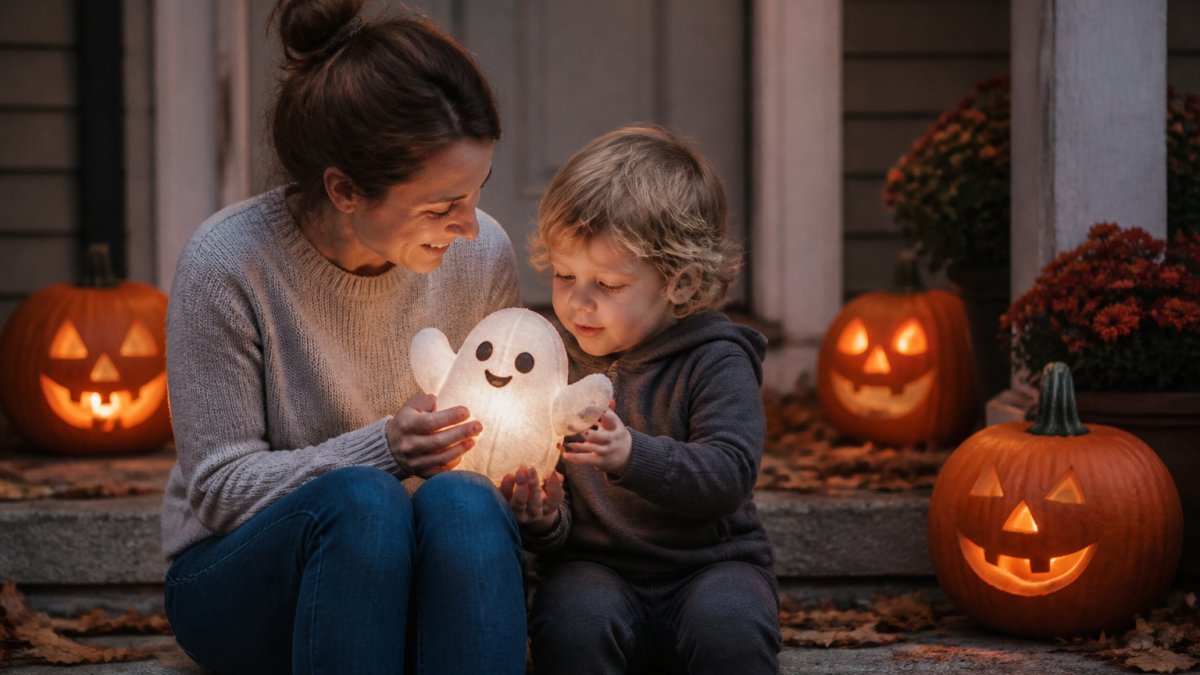
The strongest traditions for this age group are the ones that happen the same way each year. The same pumpkin patch visit. The same movie night. The same simple craft or activity that becomes "our thing."
Starting Simple: October 1st Rituals
October 1st is the unofficial start of the season. Many families mark it with a small ritual that signals: "Halloween time is here."
Some families light a special candle. Others hang a decoration together. A few pull out a kindness activity or tradition marker on that exact date.

The ritual doesn't matter as much as the consistency. When your child knows that October 1st means something special happens in your family, they start counting down to it. That anticipation is half the joy.
Costume Try-Ons Without the Pressure
Costume decisions stress out parents and kids alike. The pressure to decide early, commit to a theme, and execute perfectly creates unnecessary tension.
A better approach: try-ons without commitment. Pull together old clothes, costumes from previous years, or pieces from a dress-up box. Let your child experiment. Change their mind. Try five different combinations.
When the costume choice comes from exploration and joy rather than pressure, kids feel more confident wearing it.
Neighborhood Walks and Trick-or-Treating Alternatives
Not every family trick-or-treats. Some live in apartments without trick-or-treating culture. Others prefer to keep Halloween low-key. Some kids have sensory sensitivities or anxiety that make trick-or-treating overwhelming.
A neighborhood walk serves the same purpose without the pressure. Walk around your block or a nearby park in costume. Stop to chat with neighbors. Enjoy the decorations.
Trunk-or-treat events at local churches or community centers offer another alternative. The controlled environment, shorter distances, and smaller crowds make it more manageable for families who want the experience without the chaos.
Halloween Kindness Activities for Kids
One of the most powerful shifts you can make is reframing Halloween around kindness instead of consumption. When kids focus on small acts of generosity, the entire season feels different.
This doesn't mean eliminating candy or costumes. It means adding a parallel track: daily moments where kids practice being kind to others.
Daily Acts of Kindness Throughout October
The simplest way to build this habit is with daily prompts.
When these acts are simple and age-appropriate, kids actually do them. They don't feel like chores. They feel like part of the fun.
The magic happens when you help your child notice the impact. "Did you see how happy that made your friend?" or "That neighbor smiled so big when they found your note." Kids internalize that their actions matter. That kindness creates real change.
Making Halloween Treats and Sharing with Others
Baking treats together is a beloved family activity. The next step is sharing those treats with others: a neighbor, a teacher, a friend, someone at a local shelter.
When kids participate in making something and then giving it away, they experience generosity directly. They see that homemade gifts carry more meaning than store-bought ones.
This doesn't require elaborate recipes. Simple cookies, brownies, or popcorn balls work perfectly. The act of making and sharing is what matters.
Halloween Movie Night Ideas for Families
A family movie night is one of the easiest traditions to establish and repeat every year.
For families with very young children (ages 3-5), stick with gentle, silly, or mildly spooky options. Casper teaches kindness.
For kids ages 6-8, you can introduce slightly more adventure. Halloweentown is a beloved classic that's fun without being frightening.
Create a ritual around the movie: the same snack, the same time of evening, the same cozy setup.
Planning Your Tradition: A Low-Stress Timeline
The reason many families feel stressed about Halloween is that they try to do everything at once, when low stress halloween traditions for families work best when activities are spread across October so nothing feels rushed. A better approach is to spread activities across October, so nothing feels rushed.
Early October: Setting the Tone
The first week of October is when you establish the rhythm. Decide on 2-3 core activities for the month. Don't overcommit. Pick things that genuinely fit your family's schedule and energy.
This is when you might visit a pumpkin patch, start a daily kindness activity, or pick out your movie for movie night. You're not doing everything yet. You're signaling that October is here and something special is happening.
Mid-October: Building Momentum
By mid-October, your core activities are in motion. Your child knows the routine. They're looking forward to it.
This is when you can add one or two smaller activities if you want to: a craft project, a costume try-on, a trip to a local Halloween event. But only if these feel natural, not forced.
Late October: Final Moments
The last week of October is when you savor what you've built. Repeat your favorite activities. Enjoy the traditions you've established. On Halloween night itself, do what feels right for your family: trick-or-treat, stay home, hand out candy, or host a small gathering.
The point is that by late October, you're not scrambling. You've been doing this all month. Halloween night is just the culmination of something you've already been enjoying.
| Timeline Phase | Key Activities | Time Commitment | Stress Level |
|---|---|---|---|
| Early October | Pumpkin patch, pick movie, start kindness activity | 2-3 hours total | Low |
| Mid-October | Repeat core activities, add one small craft or event | 1-2 hours per week | Low |
| Late October | Savor traditions, finalize costume, enjoy the season | 1-2 hours per week | Low |
Making Traditions Work for Every Family
Not every family looks the same. Not every family celebrates the same way. The best traditions are the ones that work for your specific situation.
Budget-Friendly Traditions
You don't need to spend money to create meaningful traditions. The most memorable activities cost little or nothing.
Pumpkin patch visits are often free or very low-cost. Movie nights cost nothing beyond what you already have at home. Kindness activities are free. Costume try-ons using clothes you already own cost nothing.
If you want to add a special element, small purchases work just as well as expensive ones. A new Halloween decoration costs a few dollars. A special treat or craft kit is affordable. The investment doesn't determine the meaning.
Traditions for Different Ages and Sensory Needs
If you have multiple kids at different ages, you need traditions that work across the range. A pumpkin patch visit works for ages 3-8. A family movie night works for everyone.
For kids with sensory sensitivities, adjust the traditions to fit their needs (Sensory Processing Therapy - tool to help parents manage sensory diet & home programs...).
The tradition itself is less important than the consistency and the connection. When you adapt it to your child's actual needs, they enjoy it more.
Weather and Accessibility Alternatives
October weather varies widely. Some families face rain, snow, or extreme temperatures.
All of your traditions can happen indoors.
The core of the tradition isn't the specific activity. It's the consistency, the connection, and the joy.
Halloween traditions don't have to be complicated or stressful.
If you're looking for a way to add meaning to your October without adding stress, consider starting with a kindness-focused tradition.
Start small. Pick one tradition that feels right for your family. Do it consistently.
Frequently Asked Questions
How do I start a low-stress Halloween tradition with young kids?
Begin small on October 1st with one simple ritual, like reading a Halloween story together or decorating one pumpkin. Pick activities that fit naturally into your routine rather than adding stress. Focus on consistency over complexity. The Boo Buddy Arrival Box ($39) includes a storybook and 31 daily kindness cards that give you a ready-made structure, so you don't have to plan each day from scratch. Most families find that repeating the same traditions year after year builds excitement and requires less effort over time.
What are some easy Halloween activities for kids that don't require lots of planning?
Pumpkin patch visits, Halloween movie nights, costume try-ons at home, neighborhood walks, simple craft projects like coloring, and baking easy treats are all low-effort options. The Boo Buddy Coloring Adventure ($8) is a screen-free activity that takes 20-30 minutes and connects to a kindness theme. You can also create traditions around simple daily acts of kindness, helping a sibling, sharing a snack, or drawing a picture for someone. These require minimal setup and teach children something meaningful without adding to your parenting workload.
Can one Halloween tradition work for kids of different ages?
Yes, if you keep the core activity flexible. For example, a pumpkin-carving tradition can have your 3-year-old do marker designs while your 8-year-old carves with your help. Halloween movie nights work across ages if you choose age-appropriate films and let younger kids leave early. Kindness activities can be adjusted too, younger children might draw pictures for neighbors, while older kids write thank-you notes. The key is having one anchor tradition (like a weekly movie night or daily kindness activity) that everyone participates in together, with age-appropriate variations.
What makes Halloween kindness activities different from regular kindness teaching?
Halloween kindness activities tie generosity to the season, making it feel special and memorable rather than like a lesson. When kindness is part of your October ritual, children associate the holiday with giving and connection instead of just candy and costumes. The Ultimate Glow Bundle ($49) includes daily kindness prompts that make it concrete, your child completes one simple act each day and sees their kindness "collected" by Boo's glowing heart. This visual reward helps young children understand that their actions matter, which is more powerful than abstract praise.
Prev post

7 Positive Parenting Tips for October That Build Kindness
Updated on 25 October 2026
Next post

How to Start Halloween Kindness Traditions That Stick
Updated on 18 October 2026


